
This is an old revision of the document!
Deconstruction - salvaging entire buildings
Deconstruction is an alternative to demolition. It means carefully dismantling the constructed components of a house (or other building) so the materials can be salvaged and reused. Materials are typically removed in the opposite order in which they were installed, to maximize reuse.
A solarpunk society may have many reasons to disassemble a building. Generally reuse of existing structures (perhaps with retrofits for insulation, solar, etc) is much better than destruction but that's not always the case:
- The building may be part of car infrastructure which can't be easily repurposed, such as a parking garage. In this case, the building's footprint may be far more useful than its current structure.
- The building may be structurally unsound and unsuitable enough for repurposing that it's hard to justify investing resources into repairs. Some buildings are just built incredibly cheaply and may not be designed to last more than a decade without a serious overhaul. McMansions and other 'builder grade' new houses are infamous for their cheap construction, but strip malls and other commercial buildings can be similarly unsustainable.
- The location may be poor. Perhaps the building has been built on what used to be a train line which society is looking to return to use. Perhaps it's on a flood plain, a landslide-prone cliff, or recurrent wildfire area where it's likely to be destroyed anyways. Or perhaps society is just taking on a new shape - in present day, car-reliant exurban/rural areas, many residential buildings have been built an impractical distance from anything else. If cars become less practical and people rely more on trains and live in denser villages, these outlying buildings may eventually be abandoned.
- The longer they’re left abandoned, the more they’ll degrade. The structures will become unsafe, the materials will rot or break, or become inaccessible, and in some cases, they’ll pose environmental risks as fuel tanks rust out, chemicals escape their storage, or damaged structures catch fire (even with the powerlines cut upstream, abandoned solar panels or poorly-isolated generators backfeeding into the grid might allow for damage to an abandoned house to cause a fire). This is especially true with modern buildings, particularly the kind of cheap new houses and McMansions with their heavy reliance on petro-products like “structural” foam columns and facades, which will go up like a struck match.
- Weather, encroaching water, mold, ice, and animals can all cause compounding damage to empty buildings surprisingly fast.
There’s tons of embodied carbon stored in those structures. In their carefully-refined materials, their transportation, and in the act of construction. Some of those materials might be very difficult to produce for a society that carefully watches its externalities and seeks to do as little harm as possible.
By carefully disassembling these structures and providing the recovered materials to their communities, solarpunk societies can build for a much lower overall cost (both environmentally and in resources harvested from the world) while removing potential toxin or fire threats. And by filling in the buildings' cellarholes and replanting, they can rewild once-developed land, build better habitats, and restore their local ecosystems.
The Process
How this looks will likely depend on where your setting is in the solarpunk transition. If it's a post-postapocalypse with scarce resources where people are focused on surviving the year and rebuilding better, it'll look a lot more ad-hoc and rushed than a post-scarcity utopia with resources to spare.
Ideally a solarpunk society is likely to place much more emphasis on including all stakeholders in a decision up front, rather than ramming a project through the way we often see in modern day civic planning. This adds a significant delay at the outset (AKA the cheap part of the process) but once a consensus is found, execution is usually unopposed and much faster.
The process of identifying buildings suitable for deconstruction, working with any owners/stewards still around, etc will be very circumstantial for your story.
There's a little more consistency in how the actual work of deconstruction will look. Most deconstruction sites will look much like a modern construction site in reverse. Different crews work on the building in stages:
- Safety inspectors will review the building and identify potential hazards. This will inform how (or if) subsequent teams perform their work.
- Depending on hazards (such as toxic mold, or asbestos) one or more specialized abatement co-op(s) may be brought in to remove the hazard.
- A deconstruction site prep team will empty the building, inside and out, of furniture, homegoods, electronics, tools, hardware and other stuff left behind onsite. They'll work with their local library networks, free groups, mutual aid networks, etc to find homes for the items they take out.
- In a more established library economy, this stuff will probably pass through organized salvage networks that inspect and clean it, so it can be returned safety to use, allowing society to meet its needs without producing new items.
- Construction crews will begin working in reverse order. For a stick-frame building this may involve removing fixtures (sinks, toilets, doors, etc), interior cladding like sheetrock, plumbing and electrical, exterior siding, flooring, roofing, and eventually the frame itself. Once the foundation is the only thing left, it may even be cut up to recover the concrete.
Building Salvage Without Deconstruction
If a building is in good shape, and is a design suitable for relocation, its possible to save even more labor and energy and simply move the entire structure. This would be useful in any circumstance where the structure itself isn't the problem - perhaps it's just sitting on a floodplain, in a predicted wildfire zone, or in the way of a new train route or on a spot where denser housing could be constructed. This practice isn't unique to Australia, but it seems to be more established there than anywhere else I've seen. They have entire lots for what they call Relocatable or Removal homes, essentially functioning as a thrift store for old houses. Rows of Queenslanders, Colonials, and postwar houses, each up on jacks, sit in jumbled rows waiting to be bought and relocated to a new site.
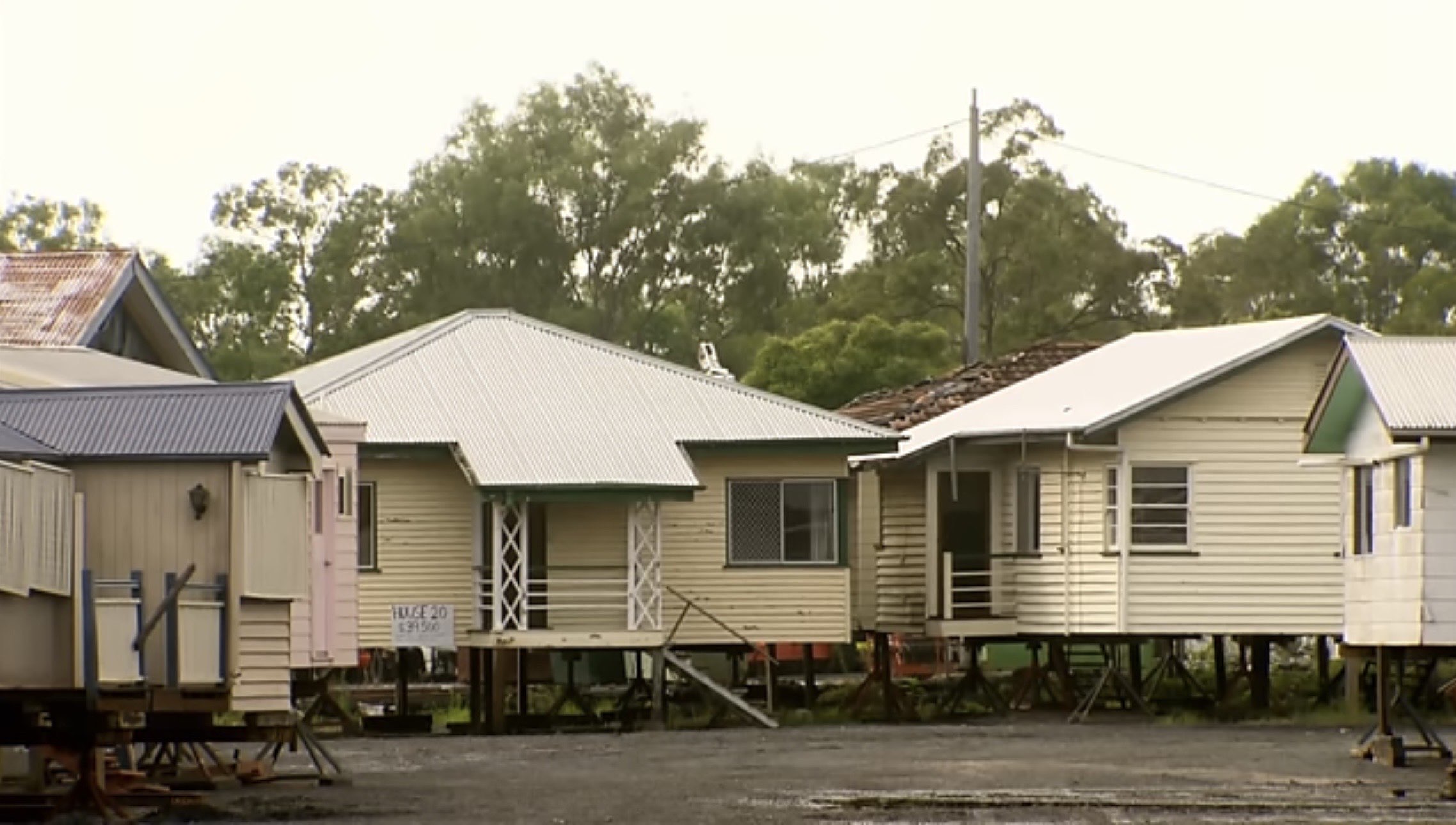
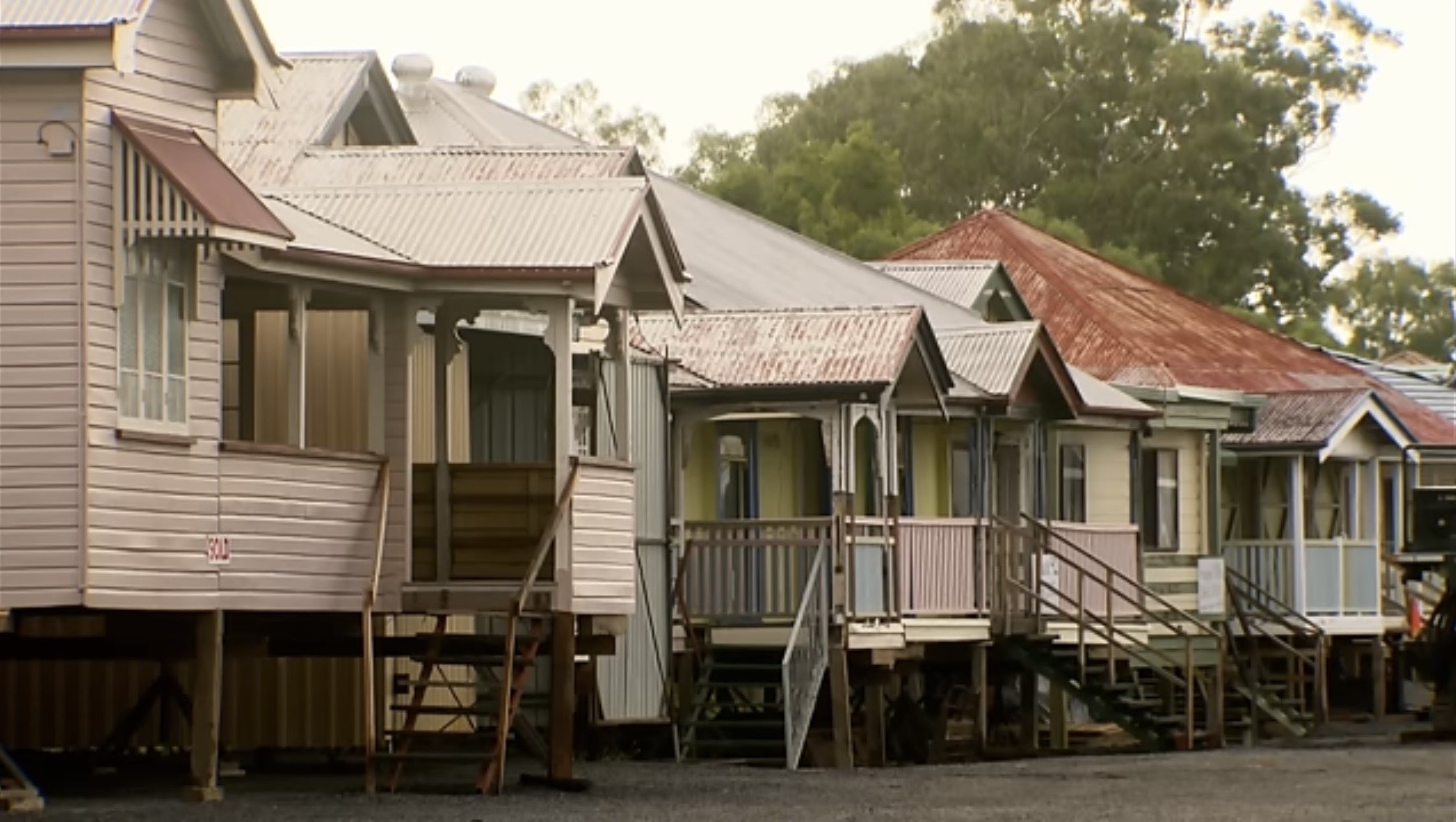
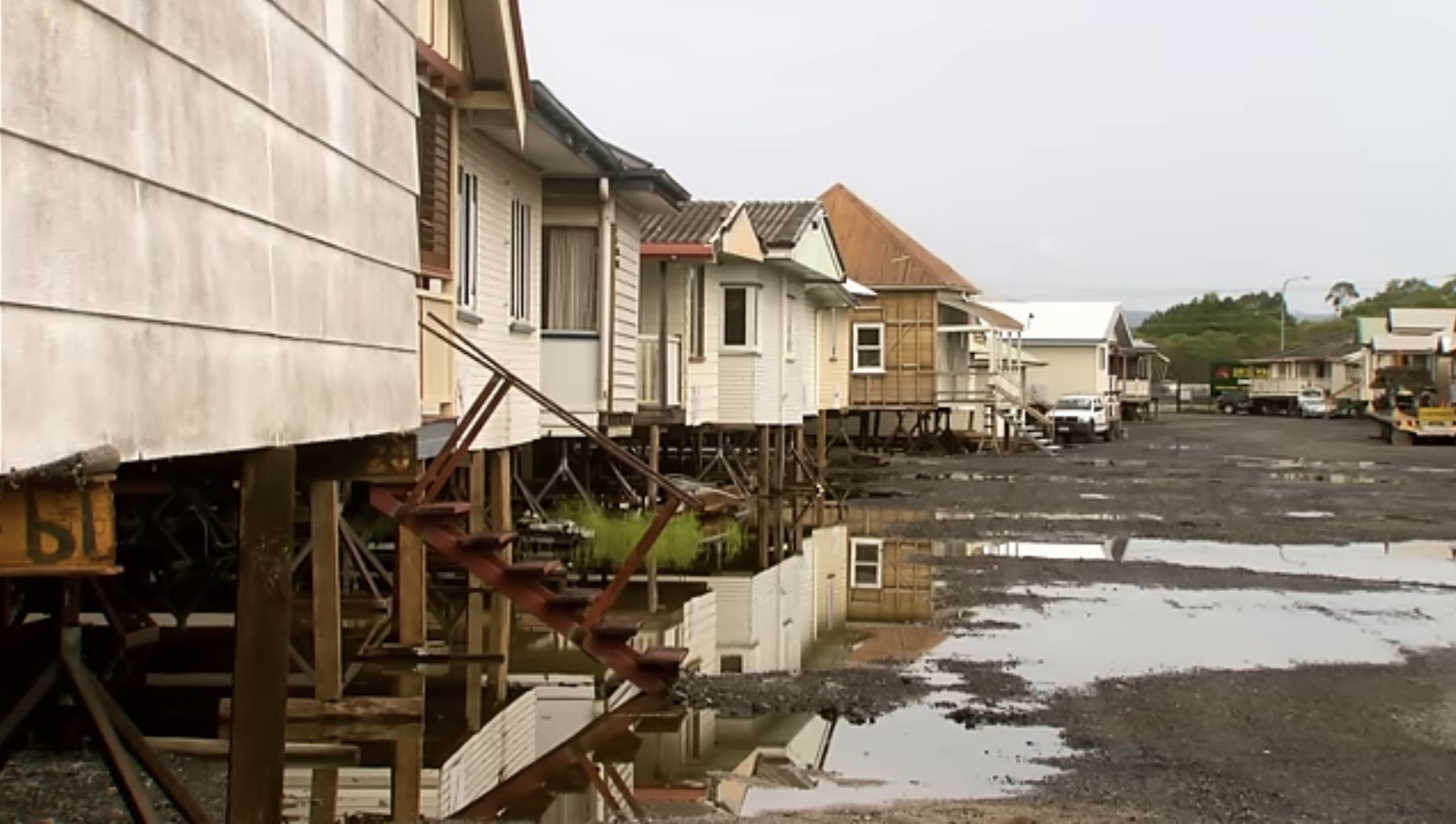
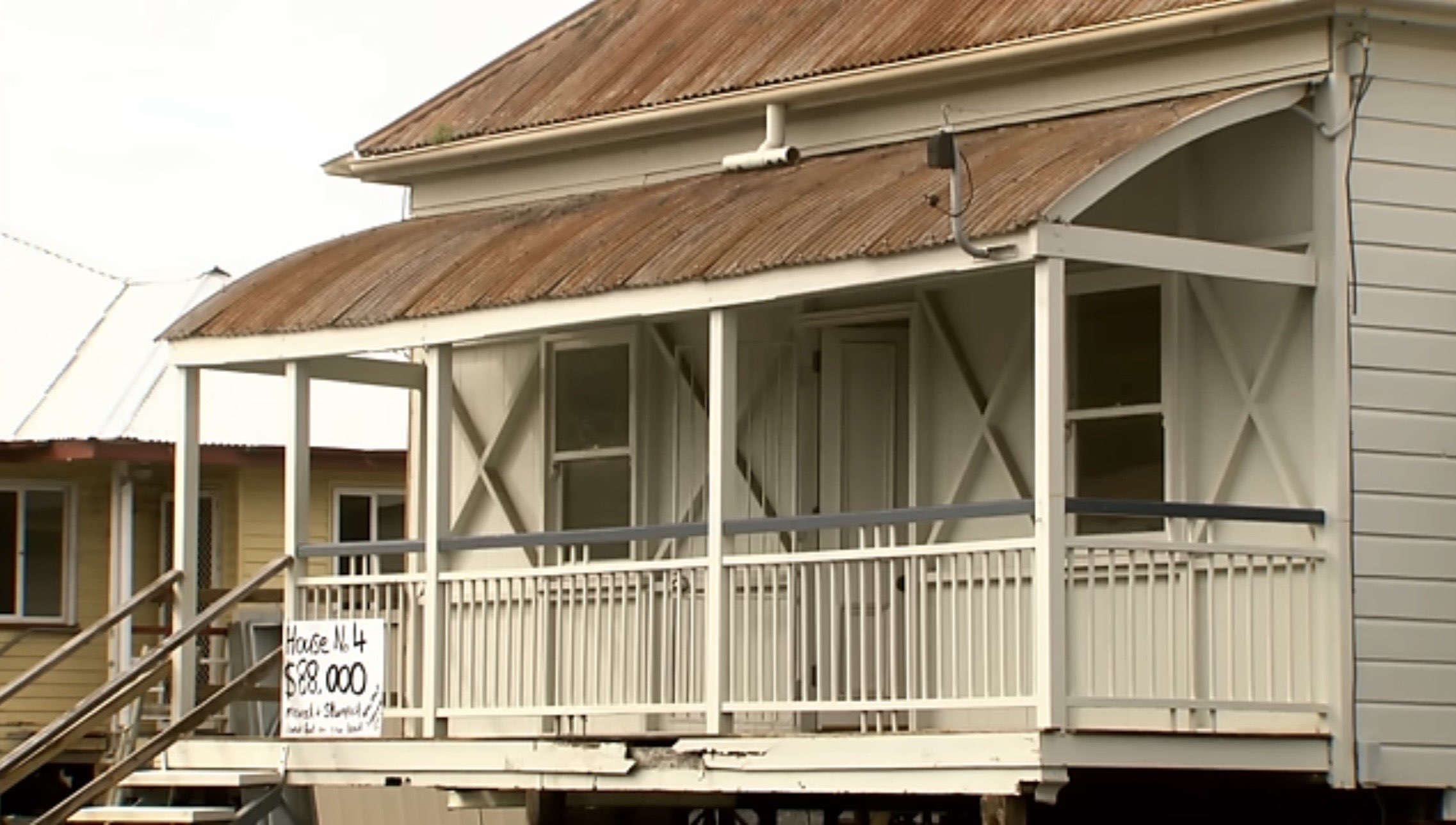
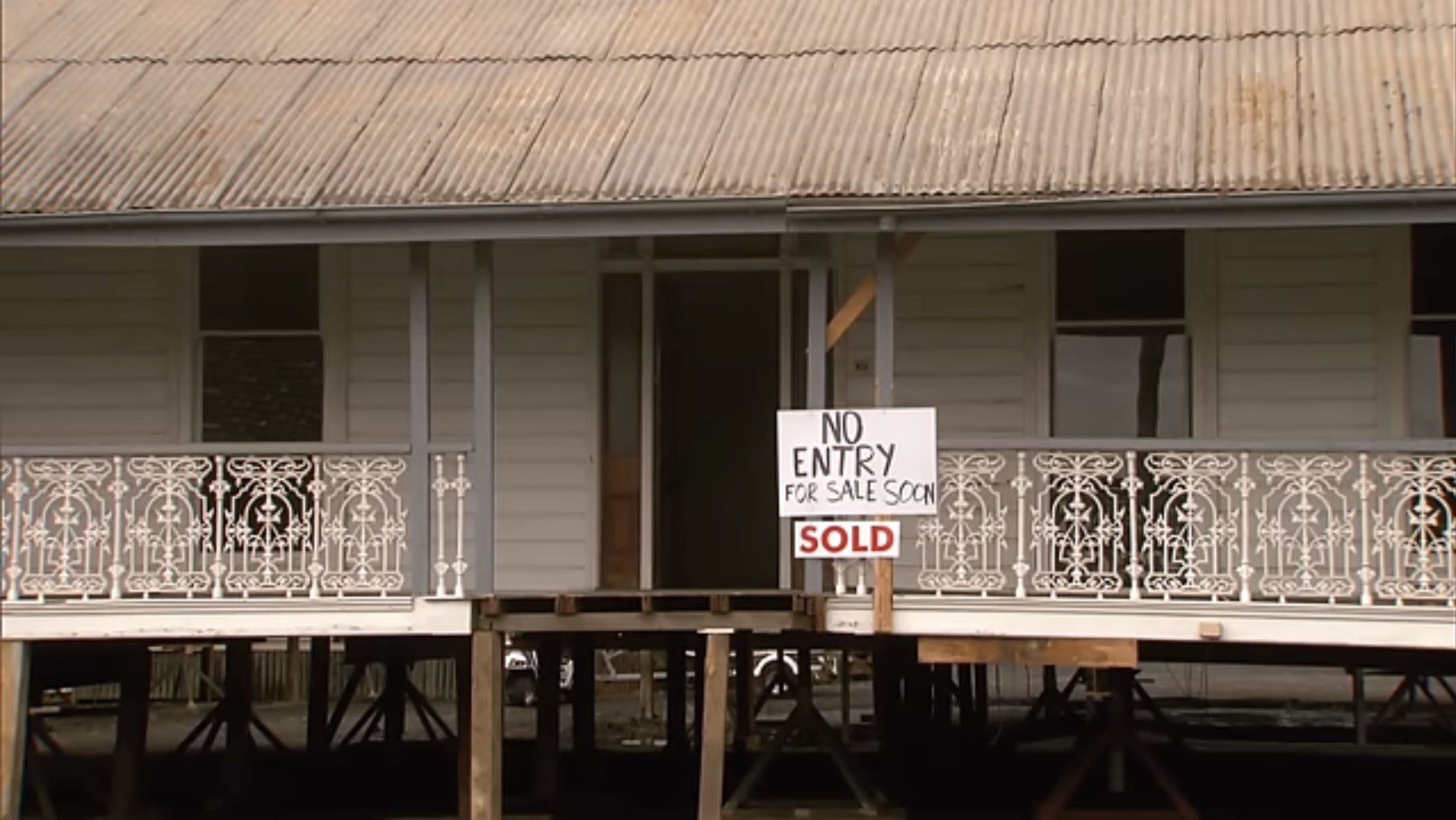
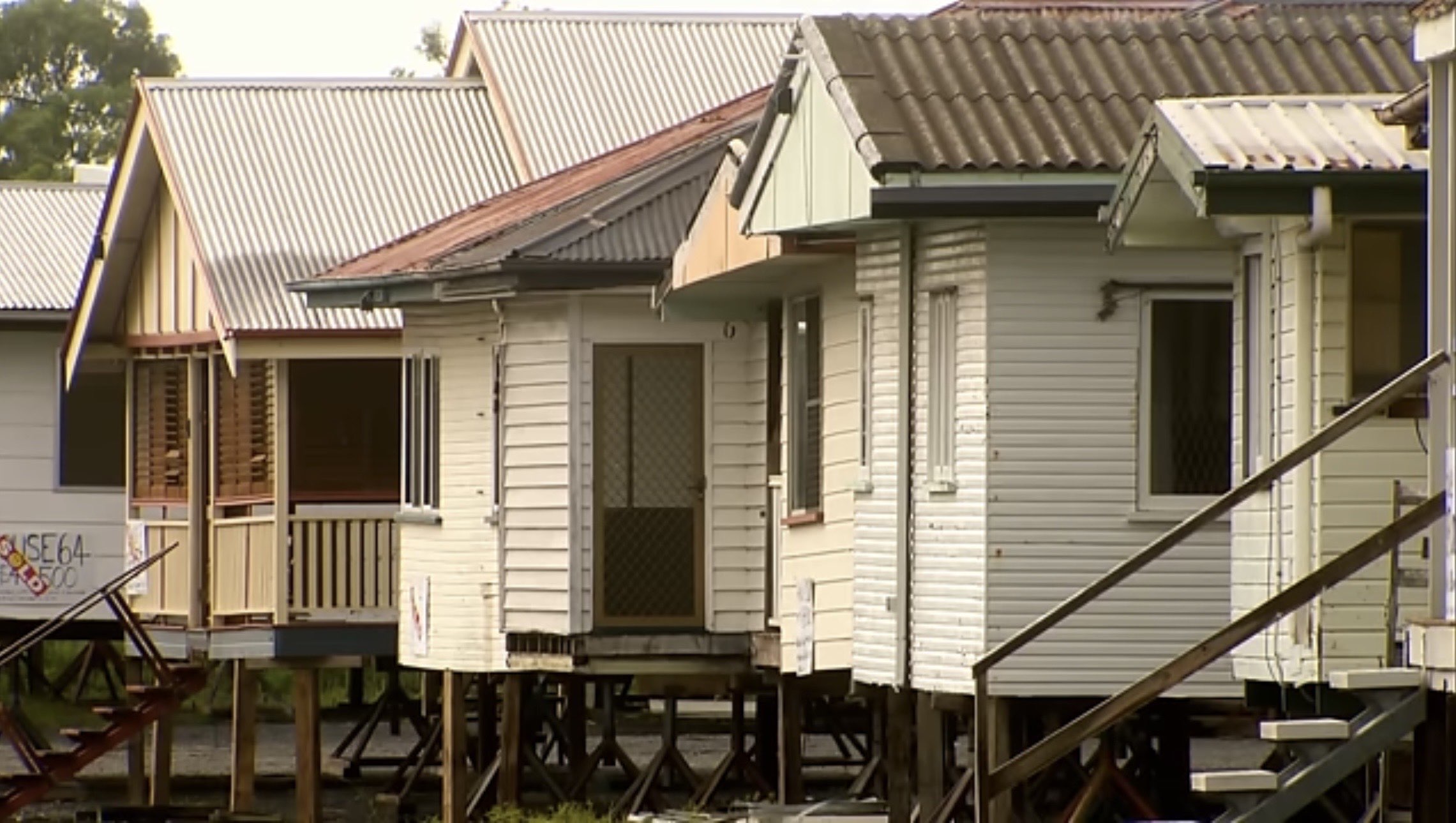
This process looks something like this:
- The building is selected for removal, and inspected by a removal company and local officials.
- Any structural preparation is made to help it survive its journey.
- It's disconnected from utilities, then from its foundation, and, if necessary, cut into sections for transportation.
- The house/sections are placed on the new foundation, and reassembled
- The plumbing and electricity are restored, then connected to local utilities.
- Additional inspections and work are conducted to ensure the building is safe.
For a much more thorough guide this government resource seems to cover most steps in the process. There are also groups online where people talk about their experiences with removal homes and house shifting.
In the modern day house shifting is done using large trucks, and the size of each section of house moved is constrained by width the road. But it's worth noting that transporting this type of bulky cargo overland is the exact type of work modern 'flying crane' airships propose to take on. It would take quite a bit of preparation, but its possible that these airships could transport suitable buildings the same way they propose to transport wind turbine blades, by lifting them by the winch and caring them along outside the ship just under the keel. This might even simplify the shifting process - the frame would still have to be supported from underneath, but buildings transported by air might need far less disassembly, and structures which weren't suitable for piecemeal transportation on a truck might do fine when lifted as one big, intact piece. This could mean that a solarpunk society could relocate more buildings than we can today.
A solarpunk setting might actually find itself with a large supply of removal homes. As in real life, where houses moved with government funding assistance can only be relocated to land outside of Flood Priority 1, 2 or 3 zones, a solarpunk society might identify large swaths of land which are unsuitable for long-term human settlement because of flood or fire risk. One of the main criteria for suitability for relocation is a wood frame, complete with floor, as wood handles movement and flexing better than brick and concrete, and houses built directly on concrete slabs will obviously have problems being moved elsewhere. Fortunately, stick-frame construction (on pylons or over basements) is very common in North America, so many buildings could be suitable.