
This is an old revision of the document!
Repairability in Solarpunk
Solarpunk artwork often features sleek, futuristic technology – sometimes because it contrasts well with nature in outdoor scenes, or because the smooth shapes compliment it and reject the techno aesthetics often found in cyberpunk and real life. But do those aesthetics match with the DIY, Open Source, Copyleft, Right-to-Repair activist side of the solarpunk movement? What would tech, appliances, etc look like in a society that prioritizes resilient, long-lasting, repairable stuff?
Some of the language in this page will be a bit generic as it tries to cover everything from computers and washing machines to bicycles to pots and pans. As with all of these resources it's a work in progress and I'm happy to add more links, dedicated sections, and specific examples if you have something you think fits!
A change in ethos (incentive?)
I think in order to talk about how stuff might be made differently, it’s worthwhile to talk about the goals and incentives that structure what gets made today, how it gets made, and how different those goals and incentives might be in a solarpunk society.
I think there’s two broad categories to look at: the first is the goals and culture of the industry/engineers/designers/company owners responsible for what gets made, the second is the mindset, expectations, and needs of the people who buy and use the products.
Making things
In our present day, at least in wealthier nations, much of how we interact with stuff is through a siloed system of extraction → manufacture → purchase → use → and disposal. The companies that produce a thing generally don’t care what happens to it once it’s sold. Their only interest is in producing and selling things, and in making a bigger profit than last quarter. They’re not responsible for the long-term, societal and environmental costs of their product, or for what happens to it after it breaks down.
Instead the rest of our society has stepped up - and subsidized them, in a way - by providing an elaborate system of waste management which whisks these unwanted things away out of sight, keeping the whole purchase → disposal system convenient. The person who buys a short-lived appliance might find their frustration at a bad product compounded by dump fees, but they can at least know that it will be hauled away from them and they won’t have to figure out what to do with it, or else see it every day. And so it is for all other stuff, from tech to appliances to furniture to the eternal packaging it all comes in.
And this is a huge part of the responsibilities of local governments, to the point that in some small towns, maintaining roads and operating some kind of dump or transfer station are almost their only real responsibilities. Bigger cities have to find suitable locations to store tremendous amounts of garbage, and create the massive lined (and eventually capped) pits which store our waste, operate fleets of trucks to gather and sort it all, and either build and run recycling centers or pay companies that do. It’s a lot of money and labor spent to make sure that buying something and throwing it away are both easy.
And that default feeds back into manufacture – to some extent, things are produced with the expectation, even requirement, that they'll be thrown away. This leads to a lot of clever shortcuts, cost-cutting, and even intentional sabotage under titles like planned obsolescence or the use of sub-par custom parts.
Several people I talked to while looking for examples for this page recommended that I look into household stuff produced in the Soviet Union. While following up on that I stumbled onto a report drafted by the CIA in 1962. They didn't have anything nice to say about the quality of Soviet appliances but they did have some interesting analysis of the Soviets' goals. They described what they considered to be an ambitious goal at the time: that by 1965 there would be one refrigerator for every five urban households, one washing machine for every three urban households, and one sewing machine for every two households, both urban and rural.
And that struck me as a very different way of looking at the production of goods.
Basically if you're an American appliance company your goal is to make and sell refrigerators. In fact, because your shareholders are looking for growth, your goal is to sell more refrigerators every year, or to sell them at a higher profit each year, or both. You don't care if you're producing more than people need, or what happens to the old ones, as long as this year's model is selling. In fact, if the previous years’ models are too reliable, your business might not be sustainable because you need new sales. You might even start an advertising campaign to try and convince people to replace a working refrigerator with a new one to bring in more money.
If you're the Soviet government, by contrast, it appears your goal was to make enough refrigerators that (eventually) every household had one, then get those factories back to work making industrial equipment, or tanks or whatever. The longer those refrigerators lasted, the fewer factory cycles had to be wasted producing replacements. (They didn’t even build dedicated factories for household goods, in many cases.)
State communism may not have much in common with most solarpunk settings, but this sort of structural/incentives framework might have a bit of overlap, even if the underlying reasons are very different.
Almost by definition, a solarpunk society is going to want to minimize the harm it's causing to the species, habitats, and landscape around it. It's going to want to extract as little material as possible, pollute as little as possible, and to clean up the existing damage wherever possible. Modern manufacturing underpins much of our current quality of life (and many peoples’ actual survival), but it's a messy, damaging, extractive, externality-producing field. There are ways to improve on it but one big sidestep to that problem is to simply produce less.
Without making other changes, producing less generally entails a lower quality of life. But there are a few ways to balance these goals: you can design things to be durable and fixable, and arrange some of the systems of society into a library economy, so that any unwanted item is recovered, cleaned up, and provided to someone else, easing both the need for new production and the burden of long-term storage in dedicated landfills.
A refrigerator company under capitalism has no incentive to sell fewer refrigerators but a solarpunk society might very much want to extract less, dispose of less, or choose to spend its limited resources on other projects. Fewer person hours, raw materials, electricity, all spent making refrigerators might actually sound great to them.
This breaks the siloed pipeline from extraction to disposal and changes the incentives: In a library economy, it should be assumed that stuff will be around for a long, long time, and it’ll be worthwhile to design it to last. Manufacturing might be less speculative, and even less specialized, depending on the local needs and conditions.
New Production:
This might be sounding a bit too state-run or top-down so lets look at other ways this sort of thing might be done. A more anarchist framework might involve open-source hardware designs, circulated freely and available to anyone who needs to make a thing. Picture something like thingiverse.
If someone needs something they might go to their local fabrication workshop and ask them to make the thing (and work out whatever compensation fits your setting). The fab shop might pull down a design - perhaps this is just a highly-rated volunteer design, or, as in Ecotopia, it's been reviewed and approved by some form of government/panel of volunteers. They buy/scavenge the parts and materials and produce a one-off, or a short run of the product to meet local need, then move on to something else. This keeps the manufacturer’s incentives more or less in line with the societal good: their livelihood/existence isn’t dependent on people buying enough of the same thing every year, so they don’t need to convince people to throw out their old one and buy a new one (through advertising, planned obscelescense, or other sabotage). I think this can also be described as a move away from speculative production to a more on-demand system.
We’ll talk in the next sections about how these goods might be made fixable and durable, but if they become unwanted (maybe two people move in together, or someone dies) the item might be passed ad-hoc to someone who needs it, or it might be returned to the library economy – volunteers or employees would collect it, inspect it, clean it up or make repairs, and provide it to someone else. If it’s beyond repair for some reason, it would be stripped for usable parts and the remaining materials recycled. Ideally only a very small portion would end up needing forever-storage. This process could take place in a huge, futuristic facility, or tons of small workshops; it all depends on your setting.
It’s important to note that there are some huge downsides to this kind of operation - a general fab shop will be far less efficient at producing any given thing than a dedicated facility. The dedicated equipment/layout, the pre-arranged supply lines for parts, the specialization and experience of the workers all play a huge role in producing a quality item as quickly and efficiently as possible.
With each new product, even a skilled fab shop crew will be relearning lessons other teams elsewhere already learned, and they'll burn a lot of time learning how to make each thing, and even just maneuvering it around their workshop.
And these efficiency losses aren’t just made in person-hours and minor injuries – this slower, less-specialized work means more electricity spent running tools and lights, parts and materials wasted through accidental damage. All of this may come with an environmental cost (in extraction or pollution) depending on how the larger society creates energy and sources materials.
But if your setting doesn't need tons of an item per year, or can't sustain the long distance shipping necessary to cover a much wider area, then a dedicated operation might not be worthwhile.
The other downside is in wait time - with speculative manufacturing, items are produced in anticipation of need and they're just waiting on a shelf when you decide you need one. This is great if you need it, but when demand is low, it leads to a lot of brand new items traveling straight from factory to warehouse to landfill without ever being used.
In an on-demand solarpunk society, you might be stuck waiting while someone downloads a design, finds parts, and assembles the thing. This is another place where a library economy shines - instead of an individual showing up at a fab shop to commission a new refrigerator, the workers at an appliance library might notice that they never have enough refrigerators in stock and commission some from the fabricators. Then when an individual needs a refrigerator, they can hopefully just go to the library and get one.
So let's get into how this long-lasting stuff gets made. There are (very broadly) two ways to do this: design it to not break, and design it to be fixed (durability and repairability). Generally the best examples will strive to do both, but these goals can sometimes conflict and force the designers to choose one or the other:
Designing stuff to be fixed
General Themes
- Fasteners not tabs or adhesives - the first steps to disassembling something should be clear from looking at it. Plastic shrouds, hidden fragile tabs, and glue all make a device harder to open up and work on, and harder to put back together. Screws or bolts should be standardized within reason, ideally drawing from a limited number of sizes & thread pitches (such as M3 for smallish things) and standard bits (not security bits), things like Torx that won’t be stripped easily. If something has to be assembled in an unintuitive way, instructions should be attached or printed/etched on the case.
- Standardized parts - whether we're talking about electronics components on a Printed Circuit Board, electric motors, or even the bolts holding it all together, a fixable design should prioritize using commonly available, off-the-shelf parts wherever possible. Where a custom component is necessary, ease of stadardized fabrication should be a goal - this might include sharing files for 3d printing or milling hardware, or wiring diagrams and bills of materials for making a replacement PCB.
- Documentation - modern designs are frequently obfuscated, to the extent that appliances commonly have limited (or inaccurate) user manuals and service manuals which are generally kept secret but sometimes leaked to the internet. Fixable solarpunk items should have robust documentation, including schematics, wiring diagrams, bills of materials (and guides for finding alternative parts wherever possible). If you'd like to see some good examples of this, thingiverse and other sites where people share their designs host many volunteer projects which have excellent documentation aimed at making assembly easy no matter which continent you're on, or what your local standard for measurements, stock material, and fasteners is in.
Electronics
Huge thanks to Alex_Glow for all her help with this section (and others), and for all the hardware folks who answered our questions on Mastodon and BSKY. The following guide is mostly made from consolidating their recommendations.
Electronics run much of our modern world, and Solarpunk is generally distinguished by being both high tech and optimistic so we're going to want to keep some level of electronics in our stories (how high tech your setting is will determine how much of this advice you want to include). Unfortunately, in the present, the electronics are often the part an item that fails first and is hardest to fix or replace. Cheap production or planned obsolescence can combine with dense, custom mystery components to turn an otherwise functional device into a paperweight. In fact, in some cases, as with smart appliances, the electronics seem to be added with the expectation that they will shorten the lifespan of the product. The complexity, lack of documentation, and difficulty (for regular people) of producing replacements make electronics an excellent place for a company to exercise control, slip in some unwanted features, or to shorten the lifespan of a product. Though to be fair, documentation is often the lowest priority for any engineer, and modern appliances often cycle quickly through new designs, so a lack of continuing support even for a fairly recent electronic component might be cost cutting and inertia rather than malice.
A solarpunk society might do things differently. I've pestered some hardware folks to find out how:
Chip Design
For many of us, the small, dense, custom-made Printed Circuit Boards (PCBs) in our devices are green or blue mysteries.
From talking with hardware folks online, it sounds like the best way to make electronics more repairable is to:
- Provide good documentation - draw up accurate schematics, circuit diagrams, and a list of components, and provide them with the device. Label the PCB wherever possible to make understanding it easier. Even better if you have more info on there (like fixed values – resistor ohm values, etc.)! See: Joey Castillo’s excellently self-documenting OpenBook device.
- Use Single Layer Boards wherever possible - A Printed Circuit Board is a layered sandwich with epoxy in the middle, layers of copper traces outside that, followed by insulating solder mask (the green or blue outer coating). Even with a single-layer board, a circuit is a bit of a maze where components change what's happening wherever they're attached - but at least you can see the traces and follow them to understand how things are connected. A multi-layer circuit board is basically a three dimensional maze where you can't even see the internal layers. This makes fixing them more difficult. It also increases the difficulty of producing them.
- Prioritize a clear layout wherever possible.
- Provide plenty of test/debug points so faults can be found more easily.
- Use standardized components which can be easily sourced or scavenged from other electronics.
- Stick to jellybean parts (commonly available electronic components made by multiple manufacturers) with standard pinouts
- Use components which are large enough for a regular human to remove and replace - I've seen 0805 and 0605 given as the suggested minimum size.
- Similarly, make sure components have enough clearance/space around them to make removing/replacing them easier.
- Avoid blobbed or filed components - Chips (Integrated Circuits) are sometimes “potted” in a glob of epoxy; sometimes they’re painted over, or have the label sanded off. The epoxy can be useful for resistance to environmental damage, though.
- Similarly, with Chip-on-Board the components which would normally be packaged into an integrated circuit are instead assembled directly on the PCB and are then covered over with a blob of epoxy. This is obviously hard to replace but my understanding is that it's often done when an off-the-shelf/jellybean part isn't available or at least not at a workable price.
- The general consensus was both Through-Soldered and Surface Mount Technology components can be repairable if they follow the above guidance (some folks felt you could go a bit smaller with SMT).
- Through-Soldered components are apparently less available, and since availability of replacements is a big part of repairability, SMT may be a better choice for those. But availability varies based on what you're making - micros are almost always SMT and large passives tend to be TH.
- SMT appears to be a little easier to assemble and fix using a hot plate, heat gun, or toaster reflow.
- The one exception where Through-Soldered stood out is for ports, cords, and anything that will take physical strain. TH connectors tend to be much stronger/more reliable so they're good for physically anchoring things to the board.
- Store any code necessary for functionality on the device itself, with source included or available. If it absolutely has to talk to an API or whatever, make it so you can run that service yourself (self-host).

Some other great resources:
- https://fixitclinic.blogspot.com/2023/06/fixit-clinic-article-in-harvard-gazette.html?m=1 - a nice article on teaching design through fix it clinic volunteering
- https://www.reddit.com/r/AskReddit/comments/1p28zj6/comment/nq0smi9/ INCREDIBLE comment(s) about hardware & everything else in a massive salt mine (incredibly inhospitable environment for electronics, as with everything salty):
Possible PCB substrate (fiberglass + epoxy) replacement materials:
- Waste shrimp shells → chitin PCB substrate
- Porcelain/ceramics as a substrate: already in use for heat-resistance.
- Aluminum is also already in general use: low weight, heat dissipation, low thermal expansion
- https://smartlab.cs.umd.edu/publication/solderlesspcb – Techniques for prototyping PCBs with SMD (surface-mount) components, including high-speed / high-current applications, in a reusable way because you don’t have to desolder anything. Uses pressure (with 3D-printed housings) to hold the components onto the board!
- Jiva Materials: recyclable AND biodegradable! (Cellulose, I think?) “Can be dissolved using hot water within a controlled environment”
Appliances
Computers and Other Advanced Electronics
This is one area where even a solarpunk society isn't going to be able to do much with some of the electronics design constraints listed above (short of producing much simpler computers for specific tasks). In order to produce anything approaching modern computers a certain degree of density is necessary (if only to reduce signal latency) and that means smaller components and layered boards. Repairability here will likely depend more on modular, standardized components (meaning your RAM, Hard Drive, Video Card, etc, wouldn't all be on one board) and ease of access to the internals (standardized fasteners not glue, etc). Open source firmware for the hardware is also very important for its long-term usability.
Modern day computer design includes a fair bit of sabotage against repair/customization - avoiding this stuff would improve the resiliancy of computers tremendously while also costing nothing. This includes
- Tamperproofing/traps - if you disassemble enough laptops and other modern electronics, you've probably encountered this one. Often in addition to plastic tabs and other hassles, you'll find that some collection of components have been glued or screwed together on both sides so that as you open it up, a delicate internal board breaks, or an antenna rips, or some other fragile piece is ruined. It's not always clear whether this is the product of cost cutting and attempts to make everything ever thinner and lighter (by designers who perhaps never expected to have to reopen a finished product for service) or a deliberate attempt to stop people from fixing their stuff, but eliminating this practice would be a huge improvement.
Efficiency and Complexity
There's another important trade-off to consider in this design process, which is part of the trend away from repairability: improvements to an appliance's efficiency (whether that's electricity or water used) can add complexity which reduces repairability.
You might need more precise (and thus complex) sensors, or lighter materials to lower the power needed to move something,
The important thing here is thinking about your setting and deciding on which tradeoffs they might accept. Perhaps people in one area have a surplus of energy during the day but shortages of refined metals, electronic components, or skilled labor and would prefer simple, sturdy, fixable stuff even if it's a little less efficient. Perhaps people in another region with constant droughts or frequent shortfalls in their green generation of electricity might need any efficiency boost they can get, even if it means their appliances, electronics, or machinery might be harder to fix.
Re-Examining Lower-Tech answers
Economies of scale in mass production allow for the widespread availability of incredibly cheap components, including programmable microcontrollers, and tiny computers. This has lead to some wonderfully advanced stuff in the DIY scene and has made hobbyist electronics available to regular people in a way that they basically never were before. Some absolutely wonderful stuff has come out of that in education and general continuing learning. The flipside of this low-cost availability is a sort of laziness, (similar to what we see on the software side, where whenever the hardware improves, the software bloats) - designers use unnecessarily powerful components to do very simple things because those components are familiar and cheap, leading to odd outcomes where some disposable vapes have enough processing power and memory to run a basic web server. There’s no reason economies of scale can’t still appear in a solarpunk society, but a general focus on reducing waste, extracting less, reducing long-distance shipping, and producing things in ethical conditions may make some of that tech less available or less cheap than it is today. Places with existing heaps of tech (such as e-waste dump sites) may even find it to be a resource they can salvage for trade or use, similar to natural resources today. But if these advanced resources become scarcer, people may use them more sparingly, and may look towards older answers for the simple jobs. Here’s a few interesting bits of tech history that might inspire something:
Also known as Cam Timers, and sometimes called Music Box Timers, these systems use a rotating drum or disk with raised contacts to activate various switches in a preprogrammed sequence. This allows for analogue control over an electrical system (such as traffic lights, washing machines, and automated industrial equipment. Much like the pegs in a music box cylinder flick a length of metal to create the notes, in a drum sequencer, as the drum spins, the pegs run across switches and close an electrical circuit. In some versions a programmer can change or rearrange (reprogram) peg or cam positions. To make them even more effective, some designs allow a certain switched circuit to cut power to the motor turning the drum (such as in a washing machine, you might stop the drum from turning while the machine fills up with water, so you don't have to worry about water pressure and the varying time it'll take to fill up). Using feedback, external time delay, and other sensory circuits, it's actually possible to build an electromechanical state machine using a cam timer. These are common in washing machines, where the cam timer runs in phases, but also stops and waits for external signals such as a fill level sensor, or a water heating temperature sensor.
The benefit of these systems to a solarpunk society is that they’re robust and simple. They offer many of the features of a modern microcontroller-based system, including being programmable. But they can be made from fairly basic materials - the most advanced component is an electric motor and those can be made with 1800s technology if necessary - and they can be heavily overbuilt to last a long time if you don't expect to need to reprogram them.
The downsides are that they're more difficult to program, which likely becomes a significant problem if you're doing it a lot, they're mechanical so they will wear out, and they lack some features like detecting and responding to malfunctions, automatically initiating test cycles, providing error codes, etc.
(From biology, electronics, aesthetics and mechanics) is a style of robotics that primarily uses simple analogue circuits, such as comparators, instead of a microprocessor in order to produce an unusually simple design. While not as flexible as microprocessor based robotics, BEAM robotics can be robust and efficient in performing the task for which it was designed.
- Incredible website on this, w/ tutorials: http://solarbotics.net/bftgu/beam.html
- This seems to be The Source: http://solarbotics.net/library.html
- A modern project that is very clever + cute and seems to embody a similar principle (even if not technically BEAM?). Solar bot that tracks the sun by having two LEDs (as light sensors) race to charge/discharge capacitors, which trigger motors on one side or the other: https://bsky.app/profile/mg.lol/post/3m72gmxv2h22l
- Having trouble finding a page with the descriptive text, but this is a gorgeous BEAM “pummer” that Mohit Bhoite built as a freeform circuit / satellite sculpture back in ‘19: https://bhoite.com/sculptures/cube-sat/
Designing stuff to not break
Like we said above, it’s worth noting that designing stuff to be fixed and designing it to not break in the first place can go hand in hand, but they can also be conflicting goals, depending on the specific circumstances. I've seen this described as durability vs repairability.
Gluing a smartphone into one irreparable brick can make it more resilient - connections are less likely to come loose when it hits the floor, meaning you skip times when you'd otherwise have to repair it. Or water might not be able to enter the case when you drop it in a lake, so nothing shorts out. These are some huge advantages - especially in a device sold with the expectation that it'll be replaced within a few years because of software problems or simply whims of fashion and product cycles. A modern smartphone has to survive a few years of harsh use, then it's very likely thrown away - and ideally the company gets to sell another one for hundreds of dollars.
Would that be the case in a solarpunk society? Would there be a new phone every year with a constant scramble to pack in new features and upgrades? Would software support be short lived to match that cycle? At what point does slow damage (for example, to a battery) and the need to fix it tip the design priorities towards repairability?
As with all things, there are tradeoffs, and we’d likely see quite a bit of debate and drama around those choices.
One place where durability can be improved is in the materials we make things from:
High Energy Materials
Our current society expects to produce new items and throw old ones away as a sort of default. Many items are made out of cheap materials specifically because they're not expected to last very long. A library economy which expects all unwanted items to cycle back into use again and again for generations might think about things differently though. I've seen it said that buying a quality product up front is a sort of luxury of the rich that saves them money over time - perhaps a solarpunk society would look at the production of items in much the same way. Can we produce things so well that we don't have to make more of the same thing, year after year, forever? Or at least so we can produce far less?
For some items, like pots and pans, oven dishes, perhaps even regular tableware, it might make sense to use expensive, high-energy materials like borosilicates (sometimes sold under the brand name Pyrex) or fused silica. Today these are generally restricted to baking dishes or specialized scientific glassware and lenses because manufacturing them is difficult and expensive. But they're resilient. If your solarpunk society has the energy to produce these materials, perhaps they'd pay that up front cost as a sort of long-term investment, instead of using cheap container glass.
If you want some really fancy glass, it turns out Transparent Aluminum is a real thing - also known as synthetic sapphire. Apparently it's already been tested for use as bullet proof windows, so presumably the manufacturing processes are far enough along that other things could be made. It's even stronger than fused silica.
Synthetic diamond is another high energy material with a lot of uses.
Some materials are a little less exotic but still expensive enough (or enough of a hassle) that they're not used in every task - think of every steel machine part, tool, piece of furniture, or part of a building you've seen rusted away to nothing. Some of them needed the specific properties of a different grade of steel which was carefully chosen - others just weren't worth making out of stainless. Perhaps they would be, in a solarpunk society.
So how would solarpunk stuff look different?
“Objects that are available in stores seem rather old fashioned. I have seen few Ecotopian-made appliances that would not look pretty primitive on American TV. One excuse I’ve heard is that they are designed for easy repair by users. At any rate they lack the streamlining we’re used to – parts stick out at odd angles, bolts and other fasteners are plainly visible, and sometimes parts are even made of wood. I have, however, observed that Ecotopians do repair their own things. In fact there are no repair shops on the streets. A curious corollary is that guarantees don’t seem to exist at all. People take it for granted that manufactured items will be sturdy, durable, and self-fixable – which of course means they are also relatively unsophisticated compared to ours. This state of affairs has not been achieved easily; I have heard many funny stories about ridiculous designs produced in the early days, lawsuits against their manufacturers, and other tribulations. One law now in effect requires that pilot models of new devices must be given to a public panel of ten ordinary people (‘consumers’ is not a term used in polite conversation here). Only if they all find they can fix likely breakdowns with ordinary tools is manufacture permitted.”
– From Ecotopia - a proto-solarpunk novel by Ernest Callenbach, written in 1975. The book is written as a travelogue by an American reporter exploring the secessionist nation of Ecotopia.
Looking at the guidelines above you might see a bit of a trend emerging:
- Using single-layer electronics boards and components large enough for humans to replace them (not to mention leaving room for labels and test points on the boards) will make for bigger electronics which will need more space in whatever appliance or device theyre a part of. Additionally, if they use something even simpler like older electromechanical drum programming systems, that could take up even more space.
- Using common, off-the-shelf parts instead of custom ones means the designers will have to leave more room (rather than commissioning a one-off component to fit specifically in an akward spot, they’ll have to leave room to acomodate a generic one, or possibly a range of options).
- Designing to have medium-life parts easily accessable for replacement could mean reconsidering the overall parts layout, case shape, order of assembly, or adding hatches to make reaching fuses, motors, belts, and other parts which are expected to wear out easier. It might even mean going back to older designs where motors were just sort of lumped onto the outside of a design, with a belt connecting it to the interior mechanisms (ideally with a guard surrounding it).
- Designing mechanical parts to last might mean using better materials or strudier designs. Again this could add weight and size.
- Designing for ease of maintenance will likely mean more visible fasteners (screws, bolts, latches/clasps, etc) rather than concealed systems (like plastic clips/tabs or adhesive) and fewer breakable plastic shrouds hiding the parts you need to access.
- Designing things to last, involving any amount of ethics in the sourcing of materials, and working in less-specialized workshops without the benefit of economies of scale, specialized tooling/assembly lines, would likely raise the upfront cost significantly.
All of this combined would lead to bigger, bulkier, more expensive final designs, lacking some of the sleek finishes and trim we associate with modern products. Solarpunk products might look old fashioned or even unfinished to our eyes.
That said, a lot of this might be mitigated by the kind of iterative design improvement/refinement we already see in open source projects on thingiverse. The level of quality produced by volunteer designers collaborating on hobby projects has amazed me plenty of times over the years, and a world where passionate people create, release, and improve free designs for everyday products, and smal, local shops produce them as needed, feels very solarpunk.
There are also other ways to make something visually appealing. Older products often featured all kinds of embossing, etching, gilding, or other artwork. Various iterations of the punk scene have placed a heavy emphasis on DIY and customization. Perhaps a solarpunk society where resale value is a low priority might add colorful custom decoration and embellishment to its tech and appliances. Perhaps small workshops would produce a run of appliances to spec in every way but a decorated case, or perhaps people would add art once they got it home.
Other Examples:
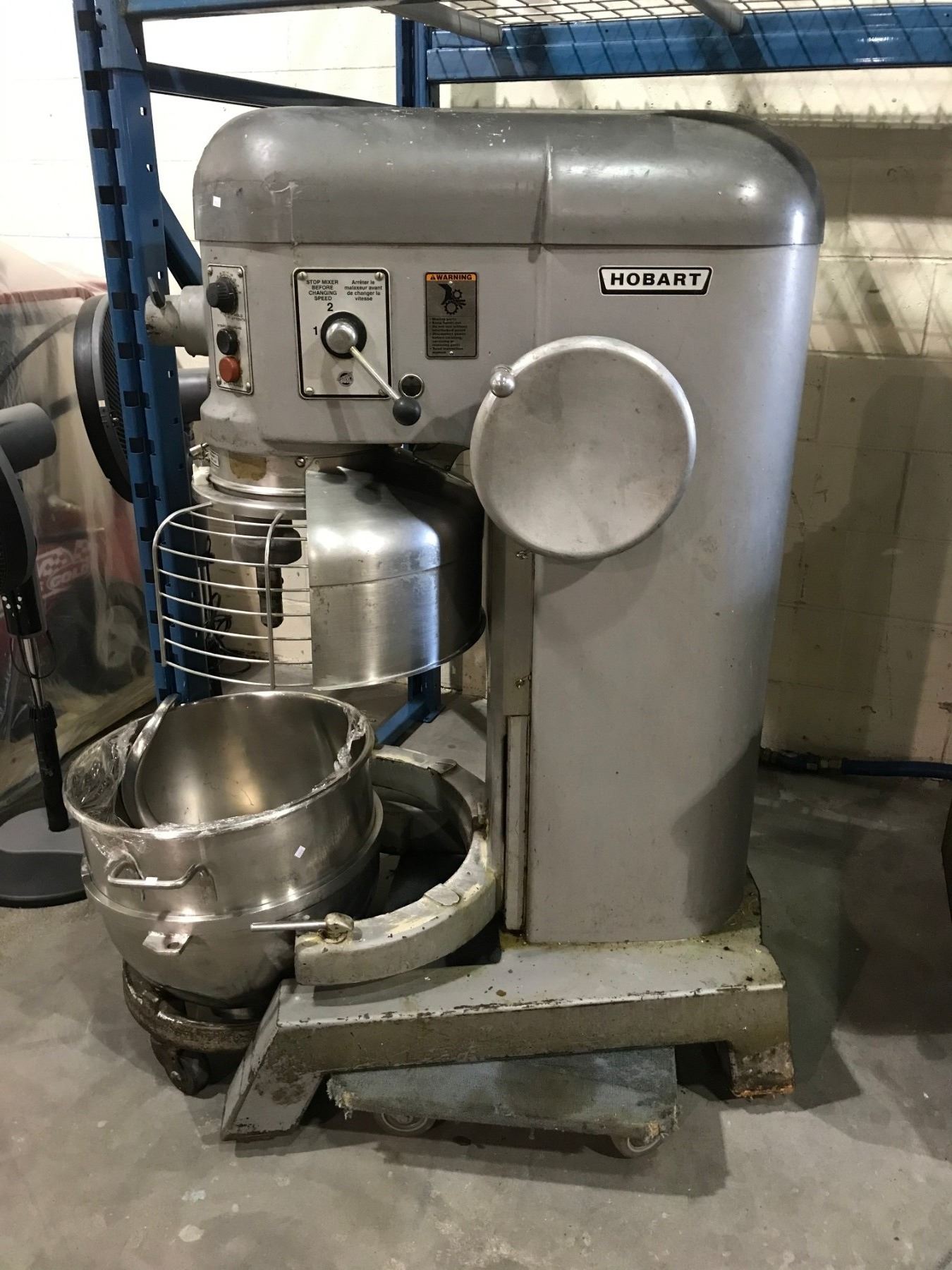
- Industrial Appliances/Tools - Industry has different priorities than individual people/households, and it seems to have more bargaining power. They don't generally expect the equipment they buy to look nice, but they expect it to work for decades under conditions that would kill 'consumer grade' appliances in weeks. The commercial/industrial version of a product will generally be repair-friendly, easy to order parts for, and long lasting. It will also be big, heavy, expensive, and it'll probably be painted battleship grey.
- For my own anecdote, I've seen a big industrial mixer in a bakery run daily for years with no maintenance and put up with all kinds of abuse while little countertop KitchenAids (supposedly the consumer-grade top-of-the-line) burned out routinely.
- This can be applied to all kinds of other appliances - commercial washing machines used by laundromats and hotels, kitchen appliances and tools used by restaurants, tools intended for mechanics, factories, or metal shops, and even exercise equipment designed for gyms rather than home use.
- Old Stuff - if you look around a mechanic's shop, it's not uncommon to see a Sears Craftsman Drill Press from the 1940s, or some other tool that's been used for generations (I once saw a drill press whose column was a metal pipe which had been cemented right into the floor!). To some extent this stuff has already been winnowed down by survivorship bias, but it also exemplifies a lot of the qualities which make a thing both durable and fixable. I've seen consumer-grade washers and dryers from the late 1970s still limping along in some homes too.
- Even if the stereotypes around Soviet design aren't historically accurate (and I'd love to see examples from where they are), they might not be a bad generalization for new production stuff in a solarpunk society - items might be big, bulky, heavy and overbuilt, meant to last a long time and able to be fixed with parts you can scavenge from a radio, tractor, or nearly anything else.
Changes to Existing Stuff
So everything up to this point was about new production. What would newly made goods, appliances, electronics, etc look like in a solarpunk society? But it’s very likely that a huge majority of stuff would pre-exist that transition. Corporate-made goods represent a vast majority the stuff from appliances to tools to vehicles we use in our current world and regardless of its flaws, that stuff generally works and represents a significant amount of embodied carbon (the energy/polution already spent to extract the resources, transport them, turn them into workable materials, transport them, produce the item, and transport it). So it’s very likely that a solarpunk world would still be using a lot of old corporate-produced items. How that looks is very much up to you, and the nature of your setting. Perhaps old items have been limped along for decades with hacky modifications and adjustments kludged on to keep them running. Perhaps even unfixable machines are sought-after and stripped for reusable parts to maintain an every-shrinking fleet of that make and model. Perhaps the work of finding and ‘open sourcing’ their documentation is an ongoing community project, and the most common modifications used to keep them running or to bring them up to code with modern expectations are public projects. (One post I found mentioned reverse engineering a burned-out, rare, manufacturer-specific Integrated Circuit and replacing it with a small VERO board using discrete components).
And perhaps some corporate designs need no improvement and are simply copied in modern, unlicensed production. Some corporate goods are genuinely long lasting and resilient even if only accidentally, and Buy-It-For-Life groups online go out of their way to find and document these items.
And there’s certainly room for an appreciation for history and style – it may be that some old corporate stuff is highly sought-after because they literally don’t make it like that anymore, even if for good reason. Perhaps extremely thin, fast smartphones or other sleek technology have a place in modern society a bit like whalebone or ivory antiques – unethical when they were made, but the practice has ended and modern collectors appreciate them for what they are.
Recycling things that are themselves designed to be DIY-friendly:
- PET machine – for recycling clear PET bottles (e.g., disposable water bottles) into 3D-printer-friendly filament: https://tylmandesign.com/project/petmachine
- Precious Plastic (recycling guides/tools/bazaar/community): https://www.preciousplastic.com
- Includes a map of local sites/communities that produce recycled materials (such as big slabs of recycled plastic of various types) and products. It would make sense for maker/hackerspaces to have recycling machines like this, where a volunteer could use them to recycle community waste & sell them to support themselves / the ‘space