
This is an old revision of the document!
Rough Mounding - rebuilding habitats in drastically disturbed sites
Ecological damage can have a sort of cascading effect - for example, clearcut logging on a slope can remove the trees and brush which were holding the soil in place, opening the way for erosion which washes away topsoil, creating a barren hillside where the forest is not able to re-establish itself, or can't do so anywhere nearly as quickly as it would have otherwise. Similarly, human activities such as mining or topsoil extraction can directly change a healthy habitat into a barren moonscape which will have a hard time recovering, especially in human timescales.
If your story features places like that, and people working to help the native species get re-established, the following resources may be useful to you.
Rough Mounding
Rough mounding is a process of digging holes and building up hummocks/mounds from the soil onsite to create a uneven landscape sort of reminiscent of egg crate foam.
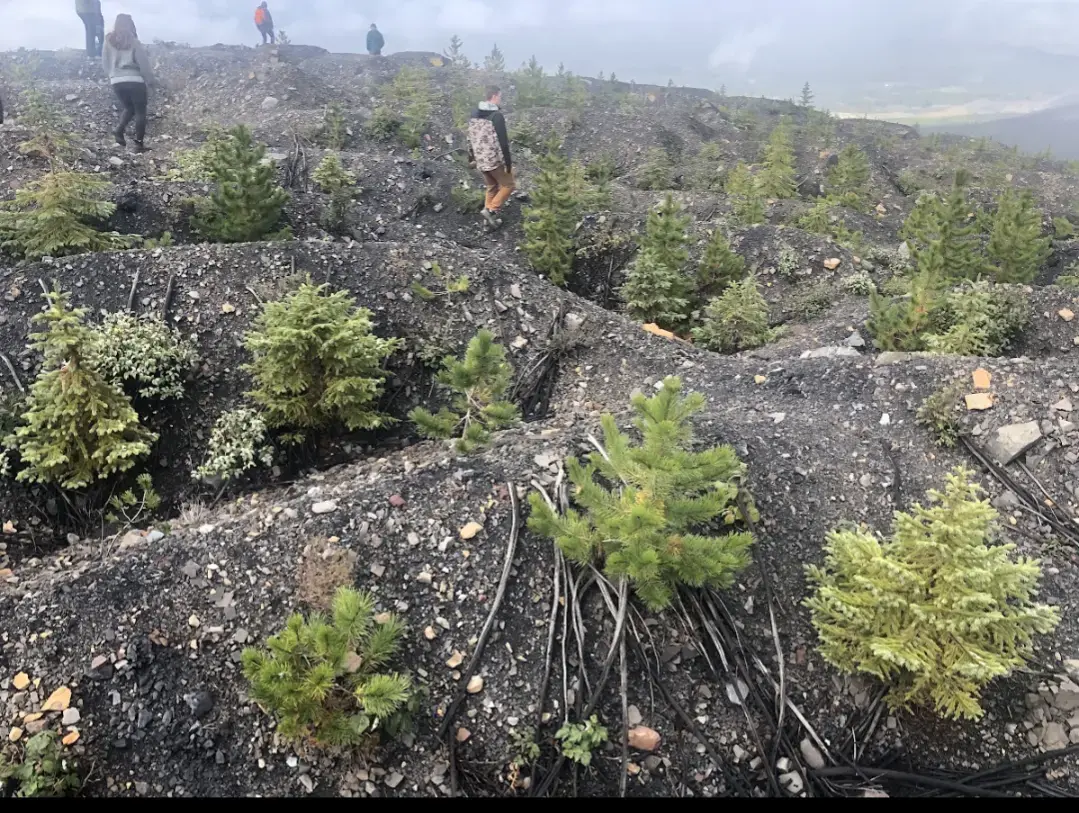
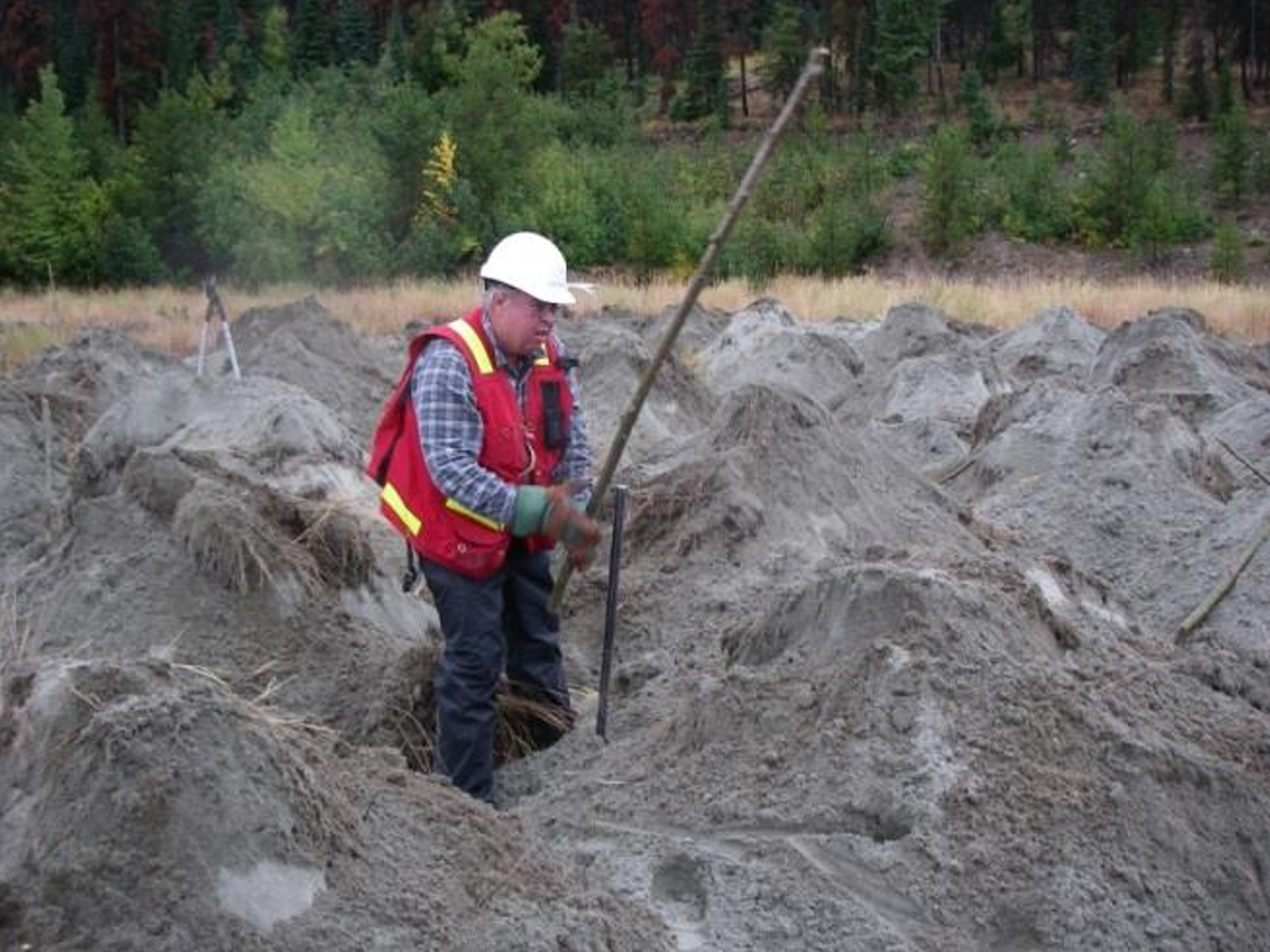
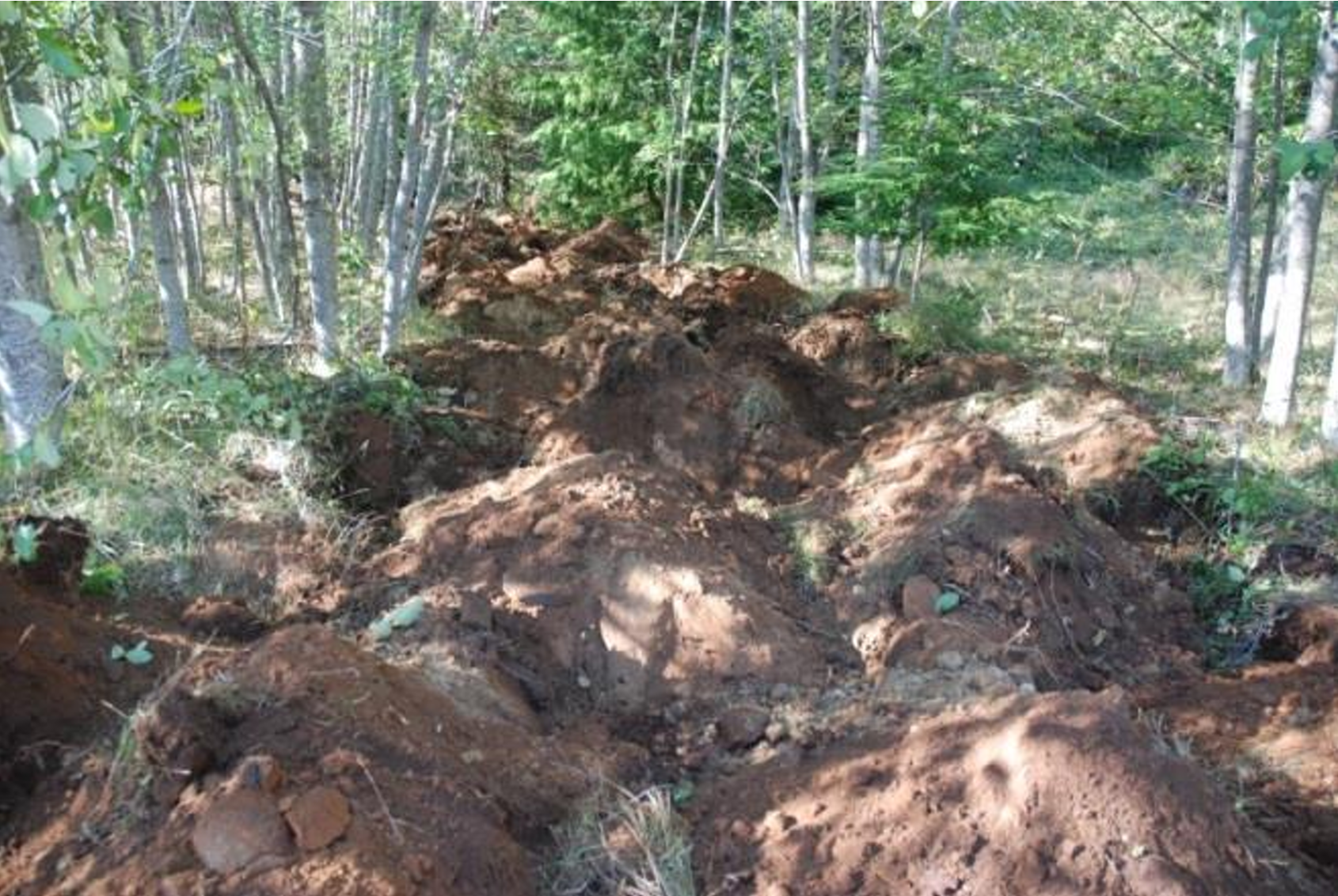
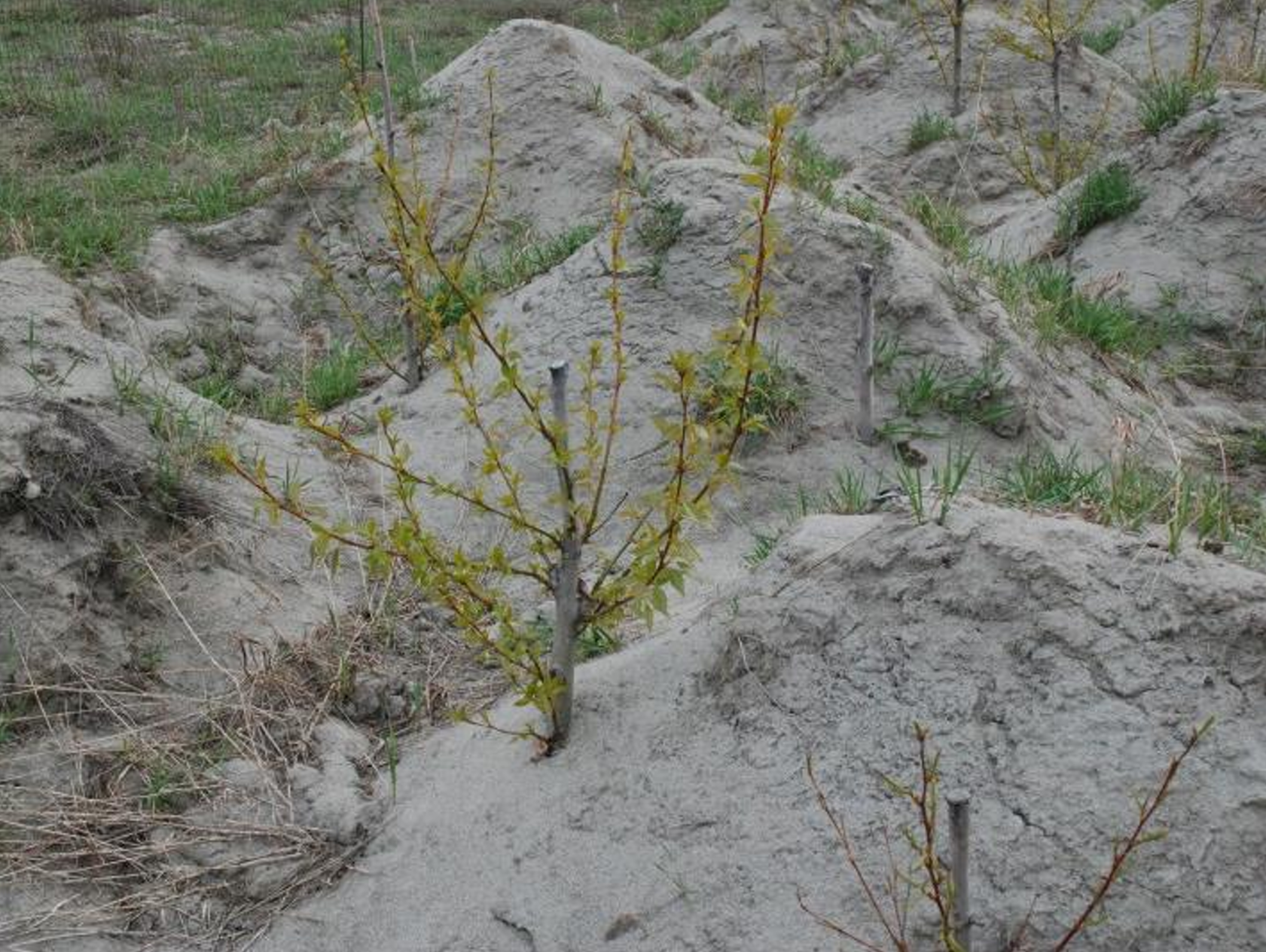
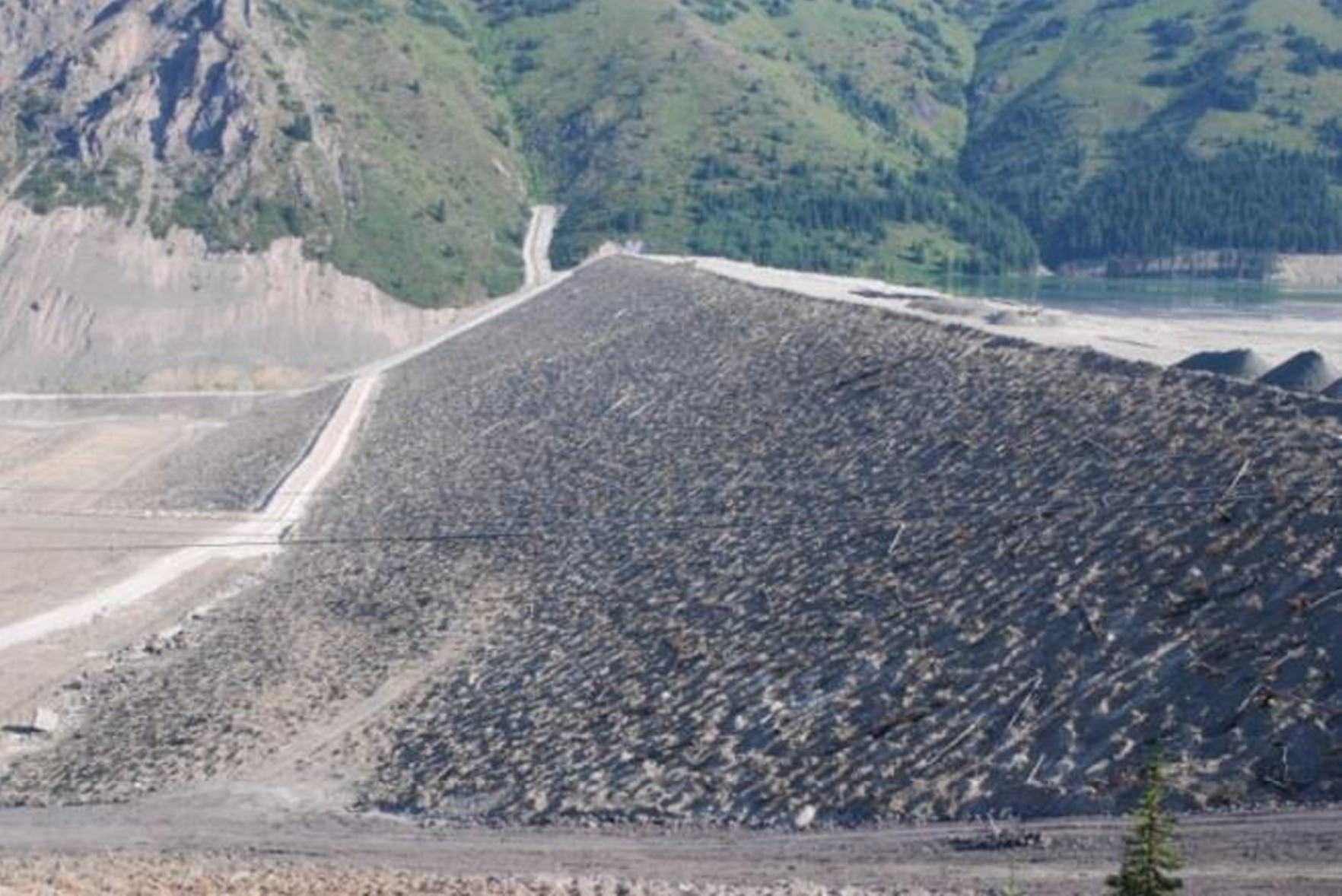
This is done for several reasons:
- It slows water movement, and reduces erosion
- It improves water retention on the slope for the plants (this seems to have some functional similarity to the construction of swales and berms though the shape of the contouring is different)
- It creates a divers micro-topography that results in more microsites for a wide variety of plants to grow. Some do well on the tops of hummocks, while the the more shade-friendly and thirstier species do well in the hollows.
- It breaks up compacted earth and makes it easier for plants to take root
How it's done
“Rough and loose surface configurations can be achieved by using an excavator to open holes on the slope, dumping the material that is generated from the holes in mounds between the holes. The excavator takes a large bucket full of soil and places it to the left of the hole that was just opened, half a bucket width from the hole so it is half in and half out of the hole. A second hole is then excavated half a bucket width to the right of the first hole. Material from this hole is then placed between the first and second holes. A third hole is now opened half a bucket width to the right of the second hole, with the excavated soil placed between the second and third holes. Care should be taken when excavating the holes to shatter the material between the holes as the hole is dug. The process of making holes and dumping soil is continued until the reasonable operating swing of the excavator is reached. The excavator then backs up the width of a hole and repeats this process, being sure to line up the holes in the new row with the space between the holes (mounds) on the previous row.”
Resources
This short PDF on the method by David Polster, the person who developed the process is very approachable: https://acrobat.adobe.com/link/review?uri=urn:aaid:scds:US:6135d26e-13c8-3bc4-b8c4-daf0f96d8021
For a much more thorough write-up by the same author, there's this paper from 2016: https://acrobat.adobe.com/link/review?uri=urn:aaid:scds:US:f5809c2f-419d-3cb3-a14d-d14e7602f4a3
And this one from 2012: https://open.library.ubc.ca/soa/cIRcle/collections/59367/items/1.0042634
Thematic overlap with other restoration practices
Rough mounding is almost the complete opposite of landscaping practices which often focus on re-contouring the land to make it more even and regular for aesthetic or convenience reasons. People, at least in the places I've seen, have a tendency to try and “tidy up” the land. They clear away plants and level the ground, and when they can't remove slopes altogether they smooth everything out, removing any uneven bumps and furrows. They fill in wetlands and straighten rivers, and add berms or levees to flood plains to keep the water from spreading above its lower banks. In more developed areas, they build complex infrastructure to channel rainwater out of the city and into the ocean as quickly as possible, something that has lead to widespread water shortages. In fact, as we noted in the resource on beaver dam analogs, this collective practice has lead to severe droughts - the very ground of the continent has dried out significantly since European colonization. These drains and wide, flat open spaces like lawns and parking lots have also played a significant role in allowing pollution to sweep unimpeded into lakes and rivers.
By contrast, rough mounding makes the land a bit less pleasant for people - the terrain is rough and challenging to walk on, with many small climbs up and down or past the hummocks and through occasionally-wet pits. As it recovers it fills with brush and new growth sapling trees. In some ways, it's not as intuitive as a yard or park but these aren't generally intended to be human spaces. They're a tailored fit for the plants and animals that thrived here in the past.
To some extent, rough mounding is part of a wider rejection of modern human landscapes. Practices like beaver dam analogs, sponge cities, and rough mounding all focus on restoring preexisting conditions and slowing the movement of water and catching it in place, allowing it to permeate the ground again.
An acknowledgement that the continent was teeming with life balanced in complex ecologies before several hundred years of colonization tried to 'civilize' it. An attempt to more closely restore, or at least mimic, the way this land and its habitats were shaped and saturated for millennia. And because this is the habitat most native species had evolved to find their niche in, it's no surprise that they often start to recover almost as soon as we nudge things back in this direction.